
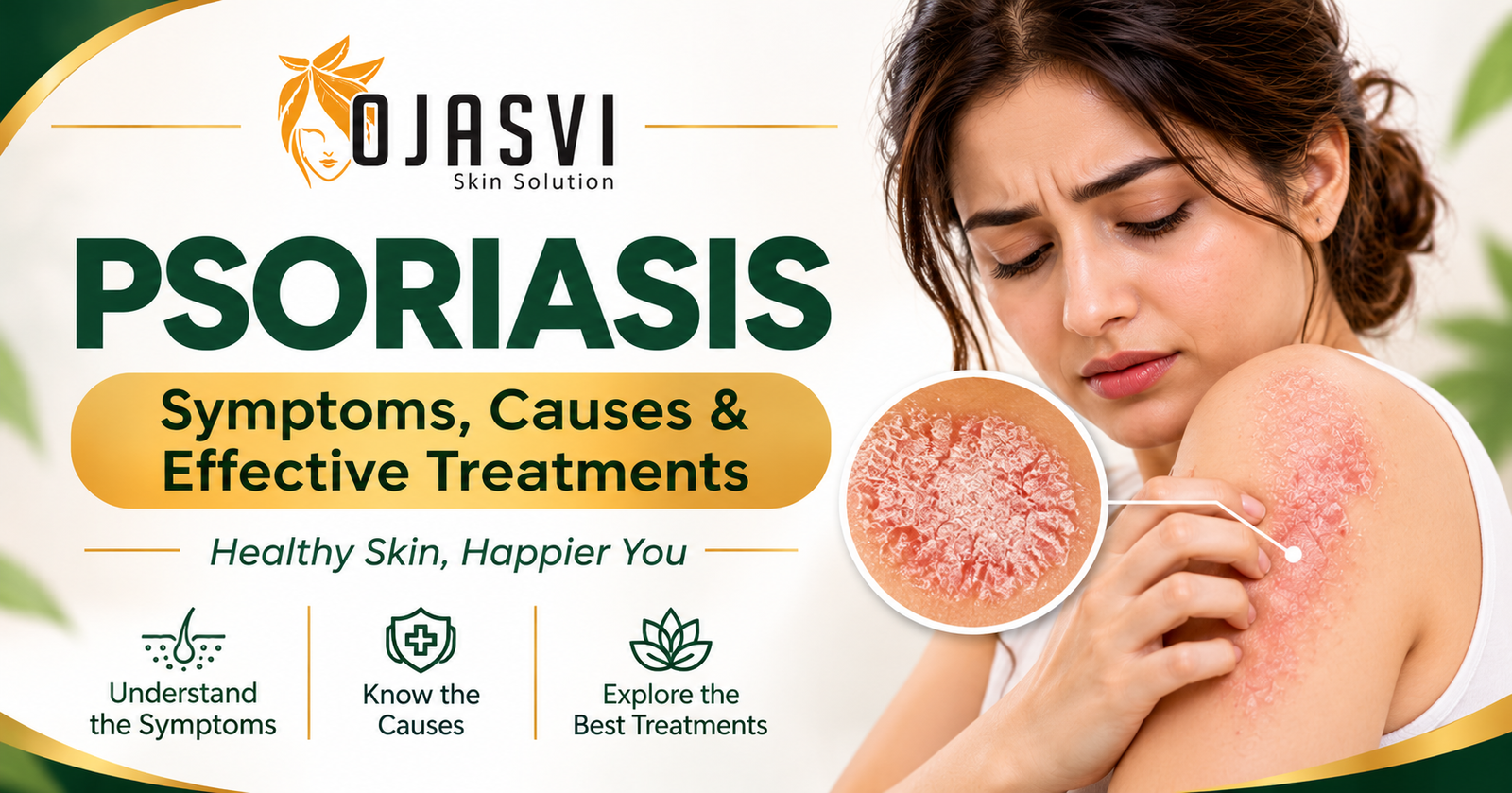
Psoriasis is a chronic inflammatory skin condition that causes skin cells to develop and build up more quickly than usual. This can result in thickened, dry or scaly patches on the skin. These patches may be itchy, sore or uncomfortable, and they can appear on different parts of the body.
Psoriasis is not contagious. It cannot spread from one person to another through touch, sharing clothes or physical contact. The condition may improve for some periods and become active again during flare-ups. The symptoms and severity can vary from person to person.
Psoriasis is a long-term condition, but appropriate medical care can help manage symptoms and reduce flare-ups. A dermatologist can assess the skin and recommend a suitable treatment plan.
What Are the Common Symptoms of Psoriasis?
The symptoms of psoriasis depend on its type and the area affected. Common signs may include:
- Thickened patches of skin
- Dry, flaky or silvery scales
- Itching, soreness or burning
- Cracked skin that may bleed
- Red, pink, brown or violet-coloured patches, depending on the skin tone
- Changes in the nails, such as pitting, thickening or separation
- Scalp scaling or flaky patches
- Joint pain, stiffness or swelling in some people
Psoriasis may affect the elbows, knees, scalp, lower back, palms, soles or nails. However, it can occur anywhere on the body. If skin symptoms are accompanied by persistent joint pain, swelling or morning stiffness, medical advice is important because psoriasis can be associated with psoriatic arthritis.
Types of Psoriasis
1. Plaque Psoriasis
Plaque psoriasis is the most common type. It typically causes raised, thickened patches covered with scales. The patches may occur on the elbows, knees, scalp or trunk.
2. Scalp Psoriasis
Scalp psoriasis can cause scaling, itching and thickened areas on the scalp. It may sometimes extend beyond the hairline. Flaking from the scalp can be mistaken for ordinary dandruff, but the treatment approach may be different.
3. Guttate Psoriasis
Guttate psoriasis causes many small, drop-shaped spots on the skin. It may appear after certain infections, particularly in younger people, but other factors can also contribute.
4. Inverse Psoriasis
Inverse psoriasis affects skin folds such as the armpits, groin, under the breasts or between the buttocks. It may appear as smooth, inflamed patches because moisture can reduce visible scaling in these areas.
5. Nail Psoriasis
Nail psoriasis may cause pits, discolouration, thickening or separation of the nail from the nail bed. Nail changes should be evaluated because fungal infections and other conditions can look similar.
What Can Trigger Psoriasis Flare-Ups?
Triggers are different for every person. Common factors that may worsen psoriasis include:
- Stress
- Skin injury, cuts or burns
- Certain infections
- Cold or dry weather
- Smoking or alcohol use
- Some medicines
- Lack of sleep
- Irritation from scratching or harsh products
Not everyone with psoriasis has the same triggers. Keeping a record of flare-ups may help identify patterns. Medicines should not be stopped or changed without consulting a qualified doctor. Psoriasis can also occur alongside other health conditions. Tell your dermatologist about persistent fatigue, joint symptoms or any other health concerns.
How Is Psoriasis Diagnosed?
A dermatologist usually examines the skin, scalp and nails. In some situations, additional tests may be recommended to rule out other skin conditions. A skin biopsy is not needed in every case, but it may be considered when the diagnosis is uncertain.
Because several conditions can cause redness, scaling or itching, self-diagnosis may lead to unsuitable treatment. A professional assessment is especially important when the rash is widespread, painful, infected or rapidly changing.
Psoriasis Treatment Options
Treatment depends on the severity, type and location of psoriasis, along with the person’s overall health. Possible treatment approaches include:
1. Topical Treatments
Creams, ointments, lotions or gels may be prescribed for mild or localised psoriasis. Depending on the condition, these may contain moisturising ingredients, vitamin D analogues, corticosteroids or other medicines. Prescription creams should be used only as directed. Applying a strong medicine for longer than advised may cause unwanted effects.
2. Phototherapy
Phototherapy uses controlled exposure to specific types of light under medical supervision. It may be recommended for certain patients when topical treatment is insufficient or when psoriasis affects larger areas.
3. Oral or Injectable Medicines
Moderate to severe psoriasis may require oral or injectable medicines. These treatments can affect the immune system and may require medical monitoring, blood tests or screening before and during treatment. The most appropriate treatment cannot be selected only by looking at photographs or symptoms described online.
Everyday Skin Care for Psoriasis
Daily skin care may help reduce dryness and irritation:
- Apply a fragrance-free moisturiser regularly
- Use gentle, non-irritating cleansers
- Take shorter baths or showers with lukewarm water
- Avoid vigorous scrubbing or peeling
- Pat the skin dry instead of rubbing it
- Keep nails trimmed to reduce damage from scratching
- Protect the skin from injury and excessive sun exposure
- Follow the treatment plan consistently
Moisturising can support the skin barrier, but it does not replace prescribed psoriasis treatment. Avoid applying home remedies, steroid creams or strong exfoliating products without medical guidance.
Frequently Asked Questions
1. Is psoriasis contagious?
No. Psoriasis is not an infection and does not spread through touch, sharing personal items or close contact.
2. Can psoriasis be cured permanently?
Psoriasis is generally considered a chronic condition. Treatment can help control symptoms and reduce flare-ups, but a permanent cure should not be promised.
3. Is psoriasis caused by poor hygiene?
No. Psoriasis is not caused by poor hygiene. Excessive washing or harsh scrubbing may irritate the skin and worsen discomfort.
4. Can diet cure psoriasis?
There is no single diet that cures psoriasis. A balanced lifestyle may support overall health, but major dietary changes should be discussed with a healthcare professional.
5. Can psoriasis affect the nails?
Yes. Psoriasis can affect the fingernails or toenails and may cause pitting, thickening, discolouration or separation from the nail bed.
6. When should I see a dermatologist?
Consult a dermatologist if the rash is persistent, spreading, painful, severely itchy, affecting the scalp or nails, or associated with joint pain. You should also seek medical advice if the symptoms interfere with sleep or daily activities.
Conclusion
Psoriasis is a chronic inflammatory skin condition that may cause scaling, itching, redness, dryness and changes in the nails or joints. It is not contagious, and the symptoms can vary between individuals. Early assessment can help identify the condition and rule out other causes of scaling or irritation. Treatment may include topical medicines, phototherapy or systemic treatment, depending on the severity and type of psoriasis. Regular moisturising, gentle skin care and awareness of personal triggers can support the overall management plan.
For more information about dermatology services and skin-related concerns, explore Ojasvi Clinics’ skin and hair solutions. Information about the dermatology team is available on the doctor profile page. The contact page can be used for clinic-related information.
Disclaimer
This content is for general educational purposes only and should not be considered a diagnosis or personalised medical advice. Psoriasis treatment, medicines and results vary from person to person. Please consult a qualified dermatologist for an individual assessment.