
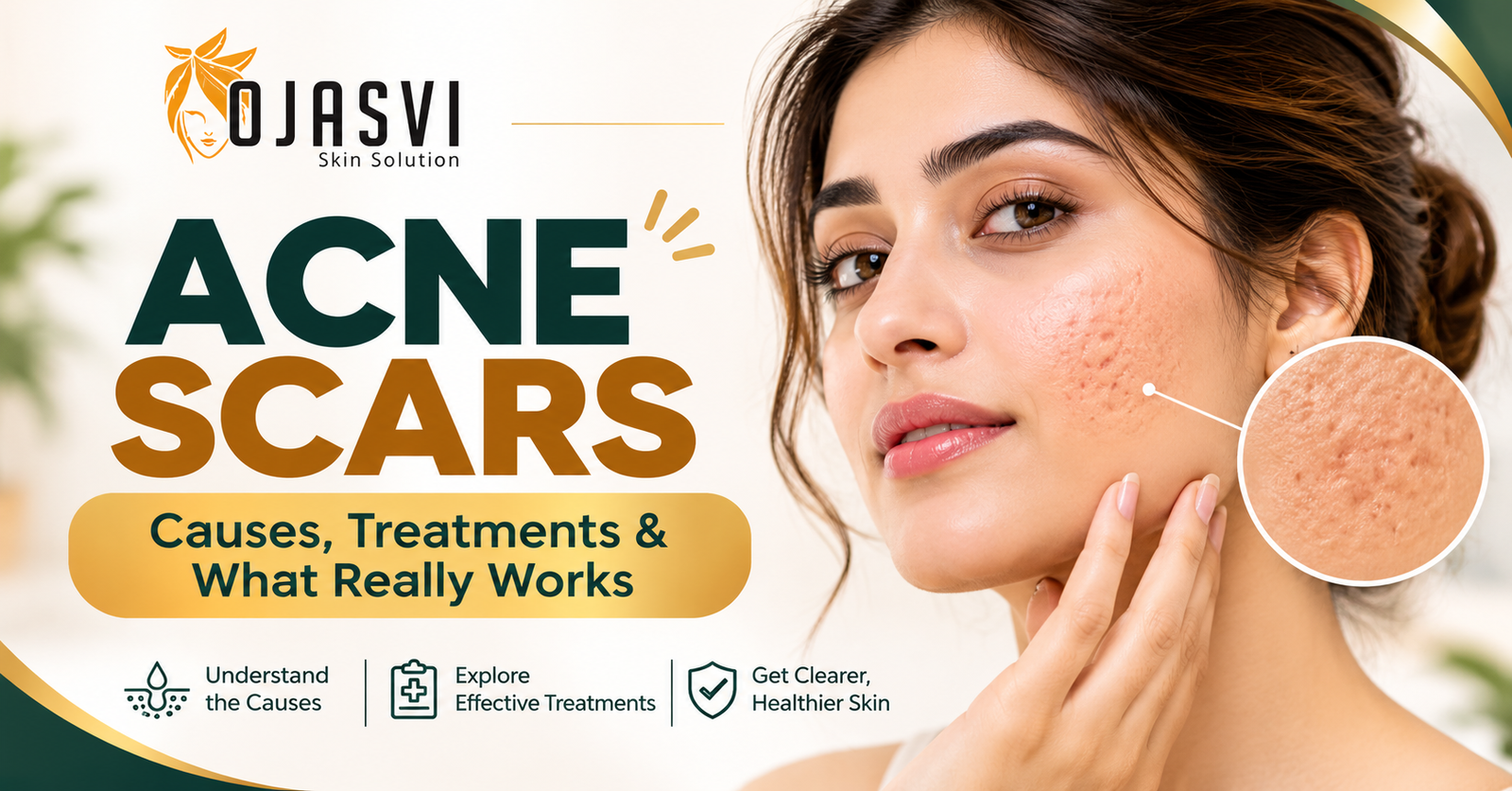
Acne scars are changes in the texture or appearance of the skin that may remain after an acne lesion heals. They commonly develop after deep, inflamed or painful acne, although not every acne breakout causes permanent scarring.
Acne scars are different from temporary acne marks. A flat red, brown or dark spot left after acne may be post-inflammatory erythema or post-inflammatory hyperpigmentation. These marks usually affect skin colour without changing the texture. Acne scars, on the other hand, can create depressions, unevenness or raised areas on the skin. A dermatologist can help distinguish between acne marks and true acne scars during a skin assessment.
What Causes Acne Scars?
When acne causes inflammation deep inside the skin, the body produces collagen while repairing the affected area. If too little collagen is produced, a depression may form. If excess collagen is produced, the scar may become raised.
The risk of developing acne scars may increase when a person has:
- Deep or painful acne
- Cystic or nodular breakouts
- Repeated inflammation
- A family history of acne scarring
- A habit of picking, squeezing or scratching acne
- Delayed or inconsistent acne treatment
Picking or squeezing acne can increase inflammation and may also increase the risk of infection and pigmentation. Treating acne early can help reduce the chance of deeper breakouts and future scarring.
Common Types of Acne Scars
1. Atrophic or Depressed Acne Scars
These scars appear as indentations in the skin because of reduced collagen formation during healing. Common types include:
- Ice-pick scars: Small, narrow and deep openings in the skin
- Boxcar scars: Wider depressions with more defined edges
- Rolling scars: Shallow depressions that create an uneven or wavy texture
Different scar types may require different treatment approaches. A procedure that is suitable for one type of scar may not provide the same benefit for another.
2. Raised Acne Scars
Raised scars develop when the body produces excess collagen during healing. They may appear thicker or firmer than the surrounding skin. Raised scars can sometimes resemble hypertrophic scars or keloids and should be assessed carefully before treatment.
3. Acne Marks and Pigmentation
Dark or red marks left after acne are not always scars. These marks may gradually fade, although the time required can vary depending on skin tone, sun exposure and the cause of the discolouration. Treatment for pigmentation is different from treatment for depressed or raised scars.
How Are Acne Scars Treated?
The most suitable treatment depends on the scar type, depth, skin tone, active acne, medical history and treatment goals. A dermatologist may recommend one treatment or a combination of procedures.
1. Microneedling
Microneedling uses very fine needles to create controlled micro-injuries in the skin. This may stimulate collagen formation and gradually improve the appearance of some depressed acne scars. Multiple sessions may be needed, and results develop gradually. Microneedling should not be performed over active infections or uncontrolled inflammatory acne without medical guidance.
2. Chemical Peels
A chemical peel uses a selected solution to exfoliate controlled layers of the skin. Depending on the product and strength, it may help improve uneven texture, acne marks and certain superficial scars. The type and concentration of the peel should be selected professionally. Using strong peeling agents without proper supervision may cause burns, irritation or changes in skin colour. You can read more about the chemical peel treatment options listed among the clinic’s treatment categories.
3. Laser-Based Treatments
Certain laser procedures may help improve acne scars, uneven texture or pigmentation. Laser treatment works differently depending on the device and whether it is ablative or non-ablative. The choice of laser should take into account the person’s skin tone, scar type, active acne, history of pigmentation and healing response. Laser treatments may require preparation and aftercare, including strict sun protection.
Ojasvi Clinics provides information about laser treatments, while the exact suitability of any laser procedure should be decided after a professional assessment.
4. Fractional Laser or Resurfacing Procedures
Fractional resurfacing treats selected microscopic areas of the skin while leaving surrounding skin untreated. It may be considered for certain textural scars, but the expected recovery, number of sessions and risk of pigmentation vary from person to person.
5. Subcision and Scar-Specific Procedures
Some rolling or tethered scars may require procedures that release fibrous bands beneath the skin. Other scars may need targeted procedures such as punch techniques, fillers or carefully selected combinations.
These treatments are not suitable for every scar and should only be recommended after examining the skin.
Can Acne Scars Be Prevented?
Prevention begins with controlling active acne. Helpful steps may include:
- Start acne treatment early when breakouts begin
- Avoid picking, popping or squeezing pimples
- Use products recommended for your skin type
- Follow the prescribed acne treatment consistently
- Use sunscreen to reduce the darkening of acne marks
- Seek medical advice for deep, painful or recurring acne
If acne is painful, widespread or leaving repeated marks, a dermatologist can help create a treatment plan. You can also explore Ojasvi’s information on skin and hair concerns and
patient education resources.
What to Expect from Acne Scar Treatment
Acne scar treatment usually requires patience. Scars may improve gradually, but complete removal cannot be guaranteed. The number of sessions depends on the scar type, depth, treatment selected and individual healing response.
Temporary redness, swelling, sensitivity, dryness or peeling may occur after some procedures. Less common risks may include infection, prolonged pigmentation changes, burns or worsening scarring. Following pre-treatment and aftercare instructions can help reduce these risks.
Treatment should be planned only after active acne is controlled or appropriately managed. A dermatologist can also explain whether the concern is acne scarring, pigmentation or another skin condition.
Frequently Asked Questions
1. Do acne scars disappear on their own?
Some colour changes may fade gradually, but true depressed or raised acne scars often do not disappear completely without treatment. Their appearance may be reduced through a suitable dermatologist-guided plan.
2. Are acne marks and acne scars the same?
No. Acne marks are usually flat changes in skin colour, while acne scars involve a change in skin texture, such as a depression or raised area.
3. Which treatment is best for acne scars?
There is no single treatment that is best for everyone. The correct option depends on the type, depth and location of the scar, along with the person’s skin type and medical history.
4. How many sessions are needed?
The number of sessions varies according to the procedure and the individual response. A dermatologist can provide an estimate after assessing the scars.
5. Can home remedies remove acne scars?
Home remedies cannot reliably remove established depressed or raised scars. Some untested ingredients may irritate the skin and worsen pigmentation. It is safer to use products recommended by a qualified professional.
6. Can acne scar treatment be performed when active acne is present?
Active acne may need to be treated first or managed alongside scar treatment. Procedures performed over inflamed or infected skin may not be suitable.
Conclusion
Acne scars can develop when inflammation damages the deeper layers of the skin. Early acne treatment, avoiding picking and consistent sun protection may help reduce the risk of scarring. For existing scars, treatment should be selected according to the scar type, skin tone, medical history and realistic treatment goals.
Dermatologist-guided options may include microneedling, chemical peels, laser procedures, resurfacing or scar-specific treatments. Results generally develop gradually, and complete removal should not be promised. For information about the medical team, visit the doctor profile page. This blog is for general education and should not replace an individual dermatology consultation.
Disclaimer
This content is for general educational purposes only and should not be considered a diagnosis or personalised medical advice. Treatment suitability, number of sessions and results may vary from person to person. Please consult a qualified dermatologist for an individual assessment.