
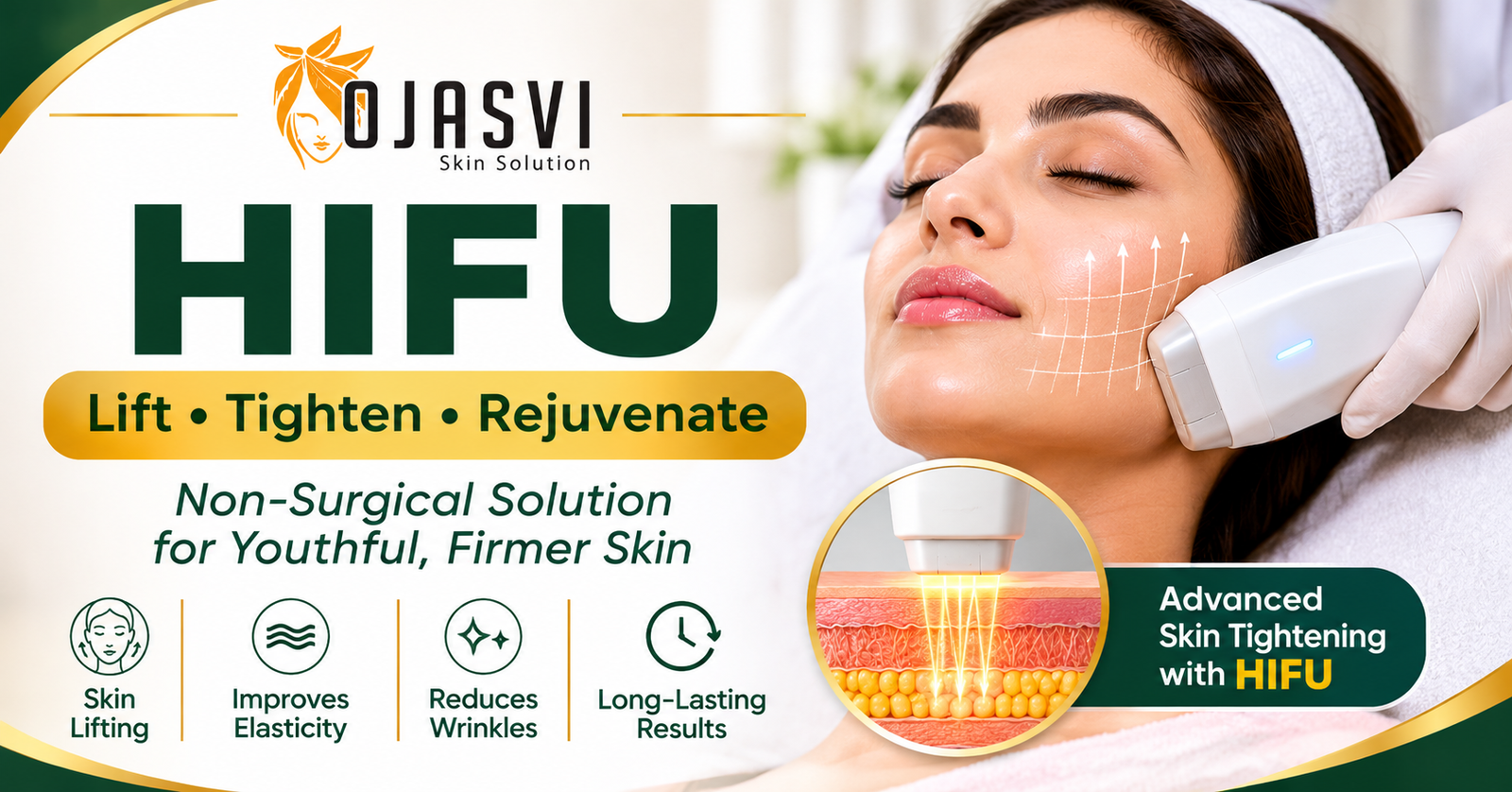
HIFU stands for High-Intensity Focused Ultrasound. In aesthetic dermatology, HIFU is a non-invasive procedure that uses focused ultrasound energy to target selected deeper layers of the skin. The energy may support collagen remodelling and can help improve the appearance of mild skin laxity.
HIFU may be considered for concerns such as mild sagging around the face, jawline, neck or under-chin area. It does not involve surgical cuts, stitches or removal of skin. However, HIFU is not a replacement for a surgical facelift, and results may vary depending on skin laxity, age, skin condition and the treatment protocol. A consultation with a qualified dermatologist or trained medical professional is important before undergoing treatment.
How Does HIFU Work?
The HIFU device delivers focused ultrasound energy to selected tissue layers beneath the skin’s surface. This creates controlled thermal points at targeted depths. The process may stimulate the skin’s natural collagen-remodelling response over time.
Unlike some surface-based procedures, focused ultrasound is designed to deliver energy below the outermost layer of the skin. The depth and energy settings should be selected according to the treatment area, skin thickness and individual anatomy.
The treatment does not produce the same result for everyone. Collagen production and skin healing responses vary between individuals, so the final improvement may develop gradually rather than immediately.
Which Areas Can Be Treated?
Depending on the device and clinical assessment, HIFU may be considered for:
- Lower face and jawline
- Under-chin area
- Neck
- Eyebrow or upper-face area
- Selected areas of mild skin laxity
The exact treatment areas depend on the device being used and the person’s skin condition. HIFU should not be performed over areas that have not been properly assessed.
Possible Benefits of HIFU
HIFU may provide the following potential benefits for selected patients:
- Improvement in the appearance of mild skin laxity
- Support for firmer-looking skin
- Gradual improvement in skin tightness
- Non-surgical approach to facial skin tightening
- No surgical cuts or stitches
- Generally limited interruption to daily activities
HIFU is most likely to be considered when the skin has mild to moderate looseness. It may be less suitable when there is significant skin excess or advanced laxity that would require surgical treatment. Claims such as “permanent lifting,” “facelift replacement,” “instant tightening” or “guaranteed results” should be avoided because the response varies between individuals.
What Happens During a HIFU Treatment?
Before the procedure, the skin is examined and the treatment area is identified. The skin may be cleansed, and ultrasound gel may be applied to help the device move across the treatment area.
During the procedure, the device delivers ultrasound energy to selected points. Some people may experience warmth, tingling, pressure or brief discomfort. The sensation can vary depending on the treatment area, energy settings and individual sensitivity.
The duration of the session depends on the area being treated and the treatment plan. The professional should explain the expected sensations, possible side effects and aftercare before starting the procedure.
Is HIFU Safe?
HIFU is a medical aesthetic procedure and should be performed using an appropriate device by a trained professional. Although it is non-invasive, it is not completely risk-free.
Temporary effects may include:
- Redness
- Tenderness
- Swelling
- Tingling or sensitivity
- Mild bruising
- Temporary discomfort
Some people may experience tenderness for longer than expected. Incorrect technique or unsuitable energy settings may increase the risk of burns, nerve-related symptoms, changes in sensation or other complications. A proper consultation helps determine whether the treatment is appropriate and whether any precautions are needed.
Who May Need to Avoid or Delay HIFU?
HIFU may not be appropriate for everyone. Inform the treating professional if you:
- Are pregnant or breastfeeding
- Have an active skin infection or open wound
- Have severe inflammation in the treatment area
- Have an autoimmune condition
- Have a history of abnormal scarring
- Have implanted electronic devices or metal in the treatment area
- Have recently undergone surgery, fillers, threads, lasers or other procedures
- Have any medical condition or medicine that may affect healing
This list is not complete. The final decision should be made after a professional medical assessment.
HIFU Preparation
The clinic may provide specific preparation instructions according to the treatment area and device. General preparation may include:
- Arriving with clean skin
- Informing the professional about medicines and medical conditions
- Sharing details of recent cosmetic procedures
- Avoiding treatment over irritated or sunburned skin
- Discussing any history of sensitivity or abnormal healing
Do not stop prescribed medicines without speaking to the doctor who prescribed them.
HIFU Aftercare
Most patients can resume routine activities after a non-invasive HIFU session, but the skin may remain sensitive for a short period. Aftercare instructions may include:
- Use a gentle cleanser and moisturiser
- Protect the treated area from excessive sun exposure
- Apply sunscreen as advised
- Avoid harsh scrubs and irritating active ingredients if recommended
- Avoid unnecessary heat exposure if instructed
- Do not massage or press the treated area unless advised
- Contact the clinic if severe pain, blistering, marked swelling or unusual weakness develops
Following aftercare advice can help support the skin’s recovery.
When Are HIFU Results Visible?
Some people notice an early change in skin tightness, but the complete effect may take several weeks or months to develop as collagen remodelling occurs. The degree and duration of improvement vary according to age, skin laxity, treatment settings and individual response.
One session may be sufficient for some people, while others may require a different treatment plan. The number of sessions should not be promised before examining the skin.
HIFU results are not equivalent to surgical lifting. Patients with significant loose skin may need to discuss other options with a qualified medical professional.
HIFU and Other Skin-Tightening Treatments
HIFU is one of several procedures that may be considered for skin laxity. Depending on the concern, a professional may discuss alternatives such as radiofrequency-based treatments, laser procedures, injectables or surgery.
The correct option depends on the degree of laxity, skin quality, treatment area, medical history and desired outcome. You can explore Ojasvi Clinics’ information on HIFU and related aesthetic treatments, as well as other skin and hair concerns.
Frequently Asked Questions
1. Is HIFU the same as a facelift?
No. HIFU is a non-invasive skin-tightening procedure, while a facelift is a surgical procedure that removes or repositions tissue. HIFU cannot provide the same result as surgery in every patient.
2. Does HIFU hurt?
Some people experience warmth, tingling, pressure or brief discomfort during treatment. The sensation varies according to the treatment area, energy level and individual sensitivity.
3. Is HIFU suitable for loose skin?
HIFU may be considered for mild to moderate skin laxity. It may not be suitable for significant skin excess, so a professional assessment is necessary.
4. How long do HIFU results take?
Improvement may develop gradually over several weeks or months. The timing varies according to the individual’s skin response and treatment plan.
5. Is there any downtime after HIFU?
Many people return to their regular activities after treatment. Mild redness, tenderness, swelling or sensitivity may occur temporarily.
6. Can HIFU remove fat?
HIFU devices and treatment protocols differ. Cosmetic skin-tightening HIFU should not automatically be described as a fat-removal treatment. The intended use of the device should be explained during consultation.
7. Can HIFU be combined with other treatments?
It may be possible to combine HIFU with other procedures, but the timing and suitability should be decided by a qualified professional. Recent fillers, threads, surgery or laser treatments should be disclosed before treatment.
Conclusion
HIFU is a non-invasive procedure that uses focused ultrasound energy to support collagen remodelling and improve the appearance of mild skin laxity. It may be considered for selected areas such as the lower face, jawline, neck and under-chin region.
The results, number of sessions and duration of improvement vary from person to person. HIFU should not be promoted as a guaranteed facelift replacement or permanent skin-tightening treatment. A professional assessment, appropriate device settings and correct aftercare are important for safe treatment planning.
For information about the dermatology team, visit the doctor profile page. For general clinic information, refer to the
patient resources page.
Disclaimer
This content is for general educational purposes only and should not be considered a diagnosis or personalised medical advice. Treatment suitability, number of sessions and results may vary from person to person. Please consult a qualified dermatologist for an individual assessment.