
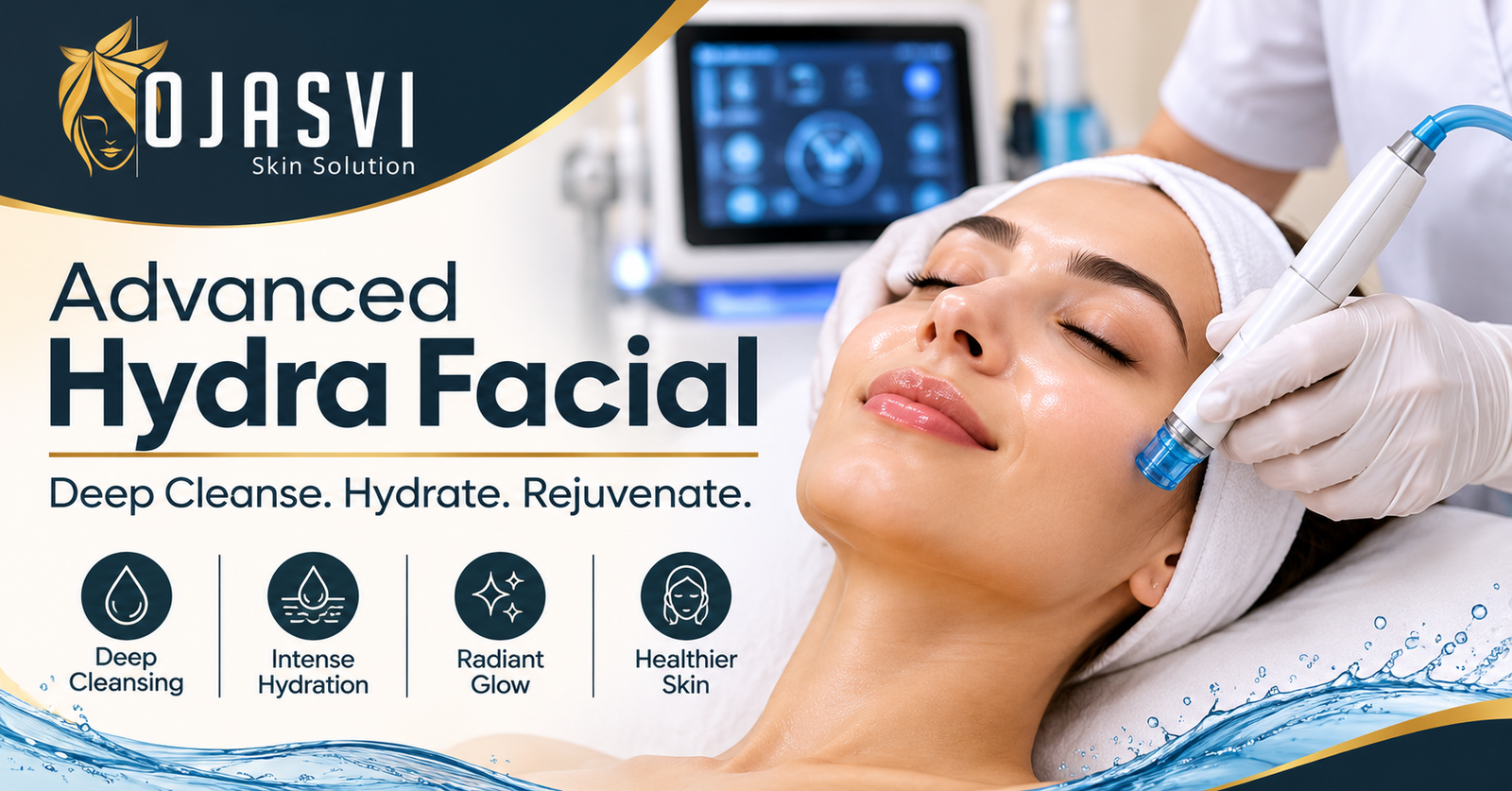
An advanced Hydra Facial is a non-invasive skin treatment that may combine cleansing, exfoliation, gentle extraction and hydration in a structured facial procedure. Depending on the protocol used, additional steps such as a mild peel, serum infusion, LED light or other skin-focused techniques may also be included.
The exact steps and products used can vary according to the treatment equipment, skin concern and professional assessment. An advanced Hydra Facial should not be considered a replacement for medical treatment when a person has an active or persistent skin condition. A skin assessment is important before choosing any facial procedure.
What Is an Advanced Hydra Facial?
A Hydra Facial generally uses a device with a specialised tip to cleanse the skin, remove surface impurities, exfoliate dead skin cells and support the application of selected topical solutions. Some protocols may include gentle suction to help clear surface congestion and a hydration step using ingredients chosen according to the skin’s needs.
The procedure is designed to improve the appearance and feel of the skin without surgery. It may be considered for concerns such as:
- Dull or tired-looking skin
- Mild surface congestion
- Dryness or dehydration
- Uneven skin texture
- Oily skin
- The appearance of enlarged pores
- Mild superficial pigmentation concerns
The suitability of the treatment depends on the condition of the skin, the products used and the individual’s medical history.
How Does an Advanced Hydra Facial Work?
The treatment usually involves several steps. However, the sequence may vary between clinics and treatment plans.
1. Cleansing
The skin is cleansed to remove surface oil, makeup, sweat and other impurities. This prepares the skin for the next steps.
2. Exfoliation
A gentle exfoliating solution or device may be used to remove dead skin cells from the surface. The type and strength of exfoliation should be selected according to the skin’s sensitivity and condition.
3. Extraction
Some Hydra Facial protocols use controlled suction to help remove surface debris from congested areas. Extraction should be performed carefully because excessive pressure may irritate the skin.
4. Hydration and Serum Application
A moisturising or antioxidant-based solution may be applied to support hydration. The ingredients should be selected according to the patient’s skin type and the treatment objective.
5. Additional Steps
Some advanced protocols may include a mild peel, LED light or other add-on procedures. These additions are not automatically suitable for everyone and should be recommended after assessment.
Possible Benefits of an Advanced Hydra Facial
An advanced Hydra Facial may provide temporary improvement in the appearance and feel of the skin. Possible benefits include:
- A cleaner skin surface
- Improved skin hydration
- Smoother-looking texture
- Temporary improvement in dullness
- Reduction in surface oil and congestion
- A refreshed appearance
- Better absorption of selected topical products
The results may vary depending on the person’s skin type, existing skin concerns, products used and frequency of treatment. A Hydra Facial should not be described as a guaranteed cure for acne, pigmentation, scars, wrinkles or any other medical condition.
For persistent acne, melasma, eczema, rosacea or significant pigmentation, a dermatologist may recommend a separate medical evaluation and treatment plan. You can learn more about skin and hair concerns and related treatments and procedures.
Is an Advanced Hydra Facial Safe?
An advanced Hydra Facial is generally considered a non-invasive procedure, but it may still cause temporary sensitivity or irritation. Possible short-term effects may include:
- Mild redness
- Tightness or dryness
- Temporary sensitivity
- Mild tingling or stinging
- Minor irritation after exfoliation or extraction
The risk of irritation may be higher when strong exfoliating solutions, aggressive extraction or unsuitable products are used. Treatment should be performed using clean equipment and products appropriate for the individual’s skin condition.
Inform the treating professional if you have sensitive skin, active acne lesions, a skin infection, eczema, rosacea, cold sores, allergies or a recent sunburn. You should also mention any recent chemical peel, laser treatment, microneedling procedure or use of prescription medicines.
Who May Need to Avoid or Delay the Treatment?
A Hydra Facial may need to be postponed if the skin has an active infection, open wound, severe irritation, sunburn or significant inflammation. People with active cold sores or certain skin conditions may require medical advice before undergoing the procedure.
If you are using prescription retinoids, exfoliating acids or acne medication, discuss this before treatment. The skin may be more sensitive to exfoliation during or after the use of some products.
Pregnant or breastfeeding individuals should also discuss the planned products and procedure with a qualified healthcare professional. Not every serum, peel or add-on step is suitable in every situation.
How to Prepare for an Advanced Hydra Facial
Preparation depends on the treatment plan, but general guidance may include:
- Avoiding strong exfoliating products before treatment if advised
- Informing the provider about allergies and current medicines
- Avoiding treatment over sunburned or irritated skin
- Sharing details of recent laser, peel or injectable procedures
- Arriving with clean skin if recommended
- Following any product-specific instructions provided by the clinic
Do not stop prescribed medicines without consulting the doctor who prescribed them.
Aftercare Following an Advanced Hydra Facial
After the procedure, the skin may feel hydrated and smooth, but it can also be mildly sensitive for a short period. Aftercare instructions may include:
- Use a gentle cleanser and moisturiser
- Apply sunscreen before going outdoors
- Avoid direct sun exposure where possible
- Avoid harsh scrubs and strong active ingredients for the advised period
- Avoid unnecessary heat, steam or intense exercise if recommended
- Do not pick or rub the skin
- Follow the specific instructions provided by the professional
If severe burning, swelling, blistering, worsening redness or other unusual symptoms occur, seek medical advice.
Frequently Asked Questions
Is an advanced Hydra Facial suitable for every skin type?
The procedure may be adapted for different skin types, but it is not automatically suitable for everyone. Skin sensitivity, active inflammation, allergies and current medication should be considered first.
Does an advanced Hydra Facial hurt?
Most people experience little or no significant discomfort, but mild tingling, suction or sensitivity may occur. The experience depends on the device, products and skin condition.
Can it treat acne?
It may help with surface oil and congestion in selected cases, but it is not a replacement for medical acne treatment. Active, painful or severe acne should be assessed by a dermatologist.
How often can the treatment be taken?
The recommended frequency depends on the skin type, products and treatment protocol. Repeated exfoliation without adequate recovery may irritate the skin, so the schedule should be individualised.
Can I use active skincare products after the procedure?
Strong acids, retinoids and other active products may increase irritation after exfoliation. Ask the treating professional when these products can be restarted.
Is there any downtime?
Many people can return to their routine after a Hydra Facial, although mild redness or sensitivity may occur. The expected recovery depends on the steps included in the protocol.
Conclusion
An advanced Hydra Facial may support temporary skin hydration, surface exfoliation, pore cleansing and a smoother-looking appearance. The procedure and products should be selected according to the individual’s skin condition rather than using the same protocol for everyone.
A consultation is important when a person has active acne, pigmentation, sensitivity, allergies or another skin concern. Safe equipment use, suitable products, professional assessment and correct aftercare can help reduce the possibility of irritation.
Disclaimer
This content is for general educational purposes only and should not be considered a diagnosis or personalised medical advice. Treatment suitability, products used and results may vary from person to person. Please consult a qualified dermatologist for an individual assessment.